UI/UX Design • Workflow Design • User Research • Design Systems • Product Design
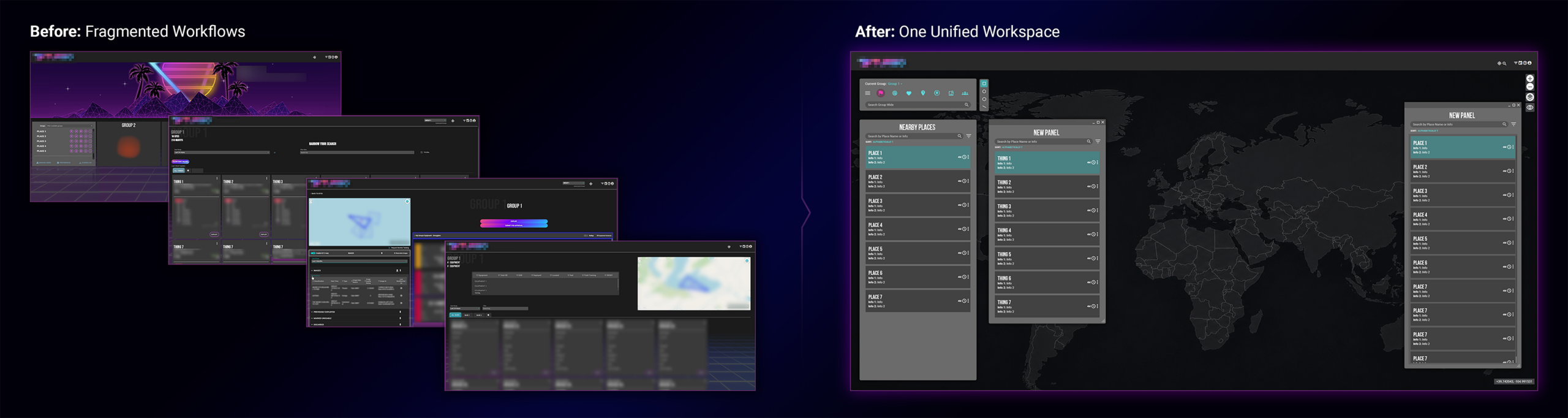
After a year of working on the platform and observing how users navigated the existing workflows, I was tasked with bringing eight distinct workflows into a single, unified experience.
Previously, entering a workflow often meant moving into its own isolated environment. Completing related tasks could require users to leave that experience, open another window, and adjust to a different interface, even when the actions they were performing were very similar.
I led the design effort to create a shared map-based workspace where these workflows could function together while preserving the functionality users relied on. The resulting system established consistent interaction patterns across the platform, reduced the separation between related tasks, and created a flexible foundation that continues to support additional workflows as the product evolves.
All sensitive information shown in this case study has been removed or replaced with placeholder data.
The platform supported eight distinct workflows that had evolved into largely separate experiences. Users would enter one workflow to complete part of their work, then often need to move into another window or experience to perform related tasks.
Because these workflows had developed independently, similar actions could behave differently depending on where users were in the platform. Navigation, layouts, terminology, and interaction patterns varied between experiences, creating unnecessary context switching as users moved through their work.
The challenge was not to combine eight workflows into one. It was to create a shared environment where each workflow could retain what made it unique while allowing them to work together through a consistent set of patterns and behaviors.
Rather than treating each workflow as a separate redesign, I started by looking for the behaviors they shared: how users searched, selected objects, navigated between views, accessed details, filtered information, and completed tasks.
Those common behaviors became the starting point for the unified experience. I explored how navigation, panels, controls, filtering, and information hierarchy could work consistently within a shared map-based workspace while still accommodating the specific needs of each workflow.
Early concepts were intentionally low fidelity. Sketching allowed me to quickly explore how previously separate experiences might work alongside one another, including panel behavior, task selection, filtering, map interactions, and different ways of organizing complex information.
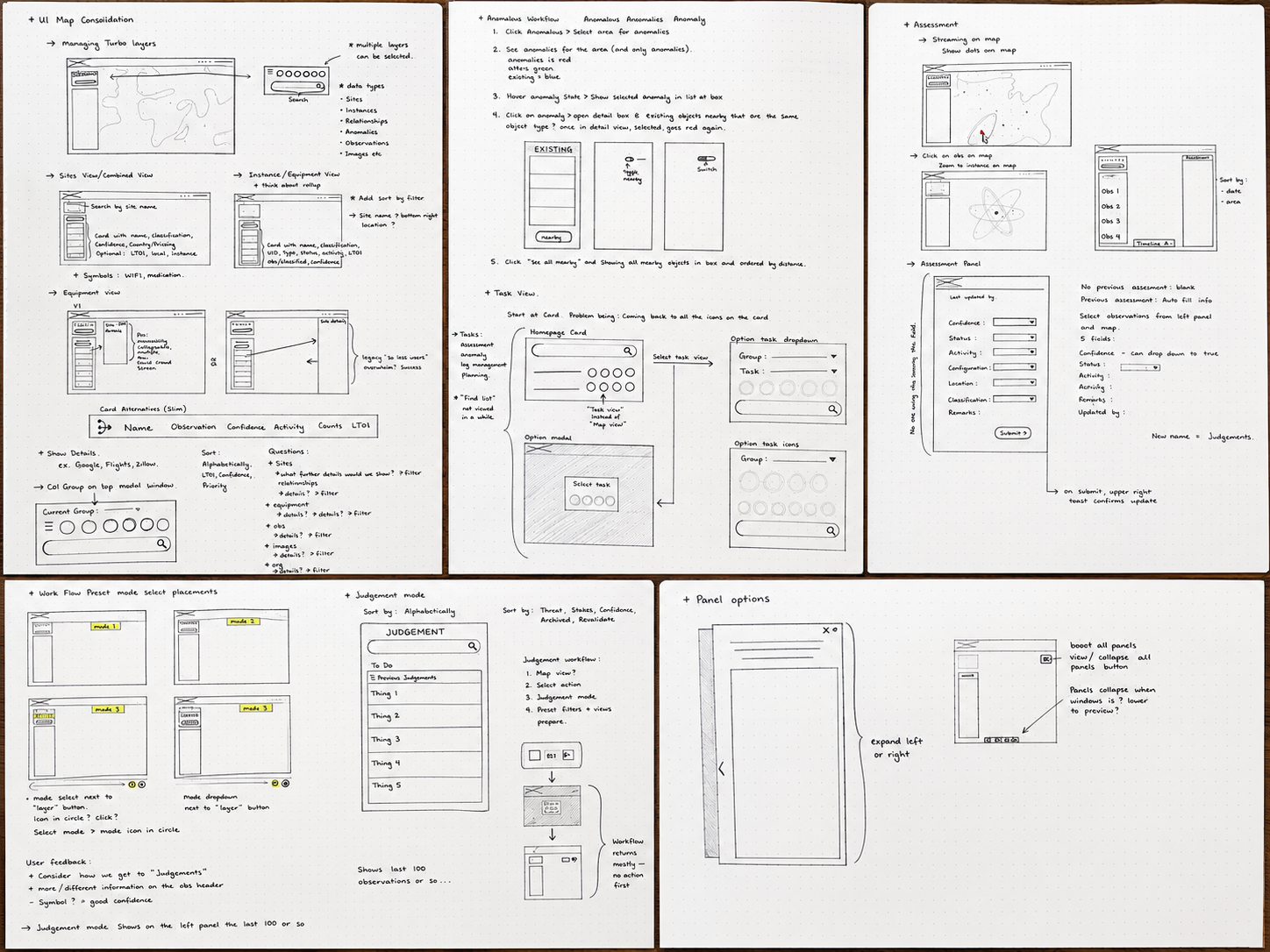
Over the course of the project, I explored dozens of concepts and created roughly sixty interface iterations, gradually refining a system that could support very different workflows without making them feel like separate products.
As the concepts evolved, the focus shifted from designing individual workflow experiences to defining how they could function together.
Shared navigation, panel behaviors, controls, and information structures began to form a common interaction model. Similar actions could now behave consistently regardless of which workflow a user was working within, while workflow-specific functionality could still be accommodated when needed.
The goal was not to make every workflow identical. It was to create enough consistency that users could move between related tasks without feeling like they had entered an entirely different product.
One Shared Workspace
Previously siloed workflows were brought into a common map-based environment, allowing users to move between related tasks without leaving the workspace or opening disconnected experiences.
Consistent Interaction Patterns
Navigation, panels, controls, filtering, and information hierarchy now follow shared patterns across workflows, creating a more predictable experience as users move throughout the platform.
Built to Expand
The unified workspace was designed as a flexible foundation rather than a fixed endpoint. Additional workflows can be incorporated into the shared environment while building on patterns users already understand.
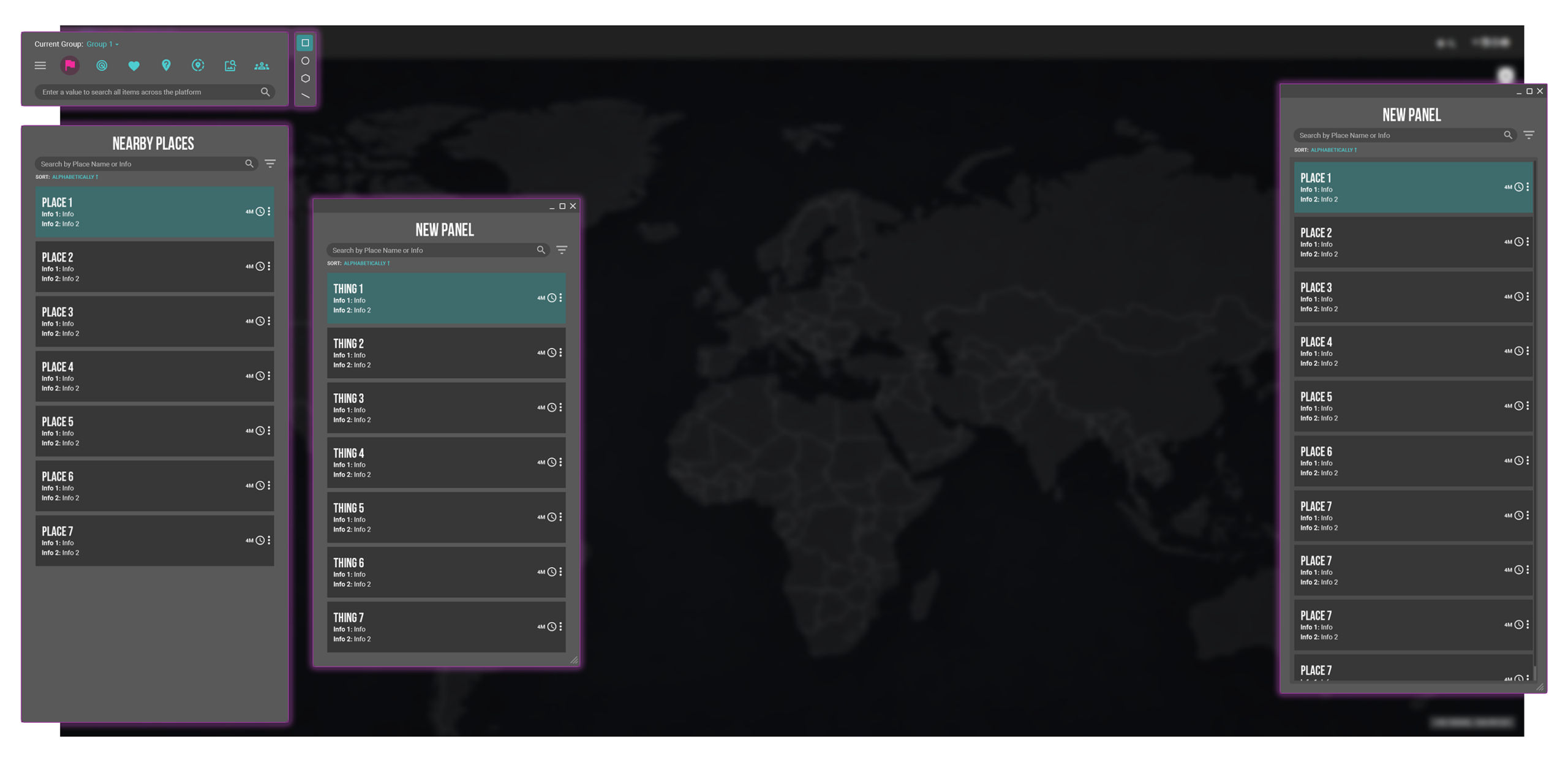
What began as an effort to bring eight siloed workflows together has become a shared foundation for the platform. Existing workflows continue to be brought into the unified experience, while new workflows can be designed within the same framework from the start.
The redesign has been extremely well received by users, creating a more cohesive and intuitive way to work while preserving the familiarity they had developed with the original workflows. As the platform continues to evolve, the system can grow with it without returning to the disconnected experiences it was designed to replace.